Categories
Uncategorized

Pics from Pompeii

Just returned from a local-color and fact-gathering weeklong trip to Pompeii for the book I’ve been working on. I’ve been wanting to go for a while now and the stars finally aligned. It was extraordinary to walk on the ancient paving stones and to see the places I’ve spent the past year, on and off, reading and writing about. Travel time from Minneapolis was about 20 hours and the jet lag weighed me down a bit, but I returned having met some great people — Italians and co-travelers from Britain, New Zealand, Spain, and California, not to mention our trusty tour leader Tony O’Connor, who patiently answered all my questions about what life in ancient Pompeii might have been like — and with a camera full of photos and some good notes.

Here is a picture of me in the Forum, with a notepad, camera, hat, backpack, and shades:


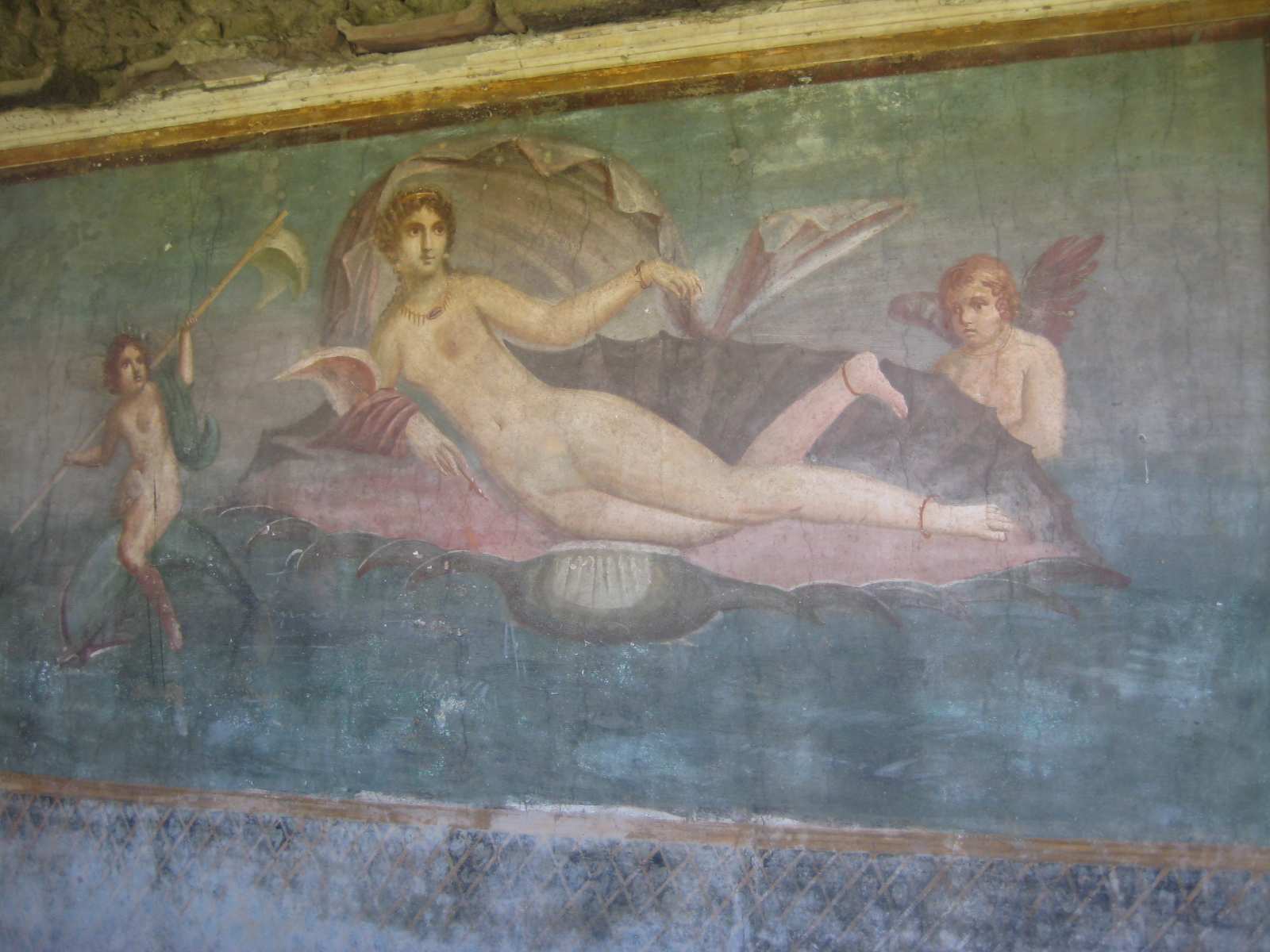
Venus in a shell
HAVE = Welcome
Villa Oplontis

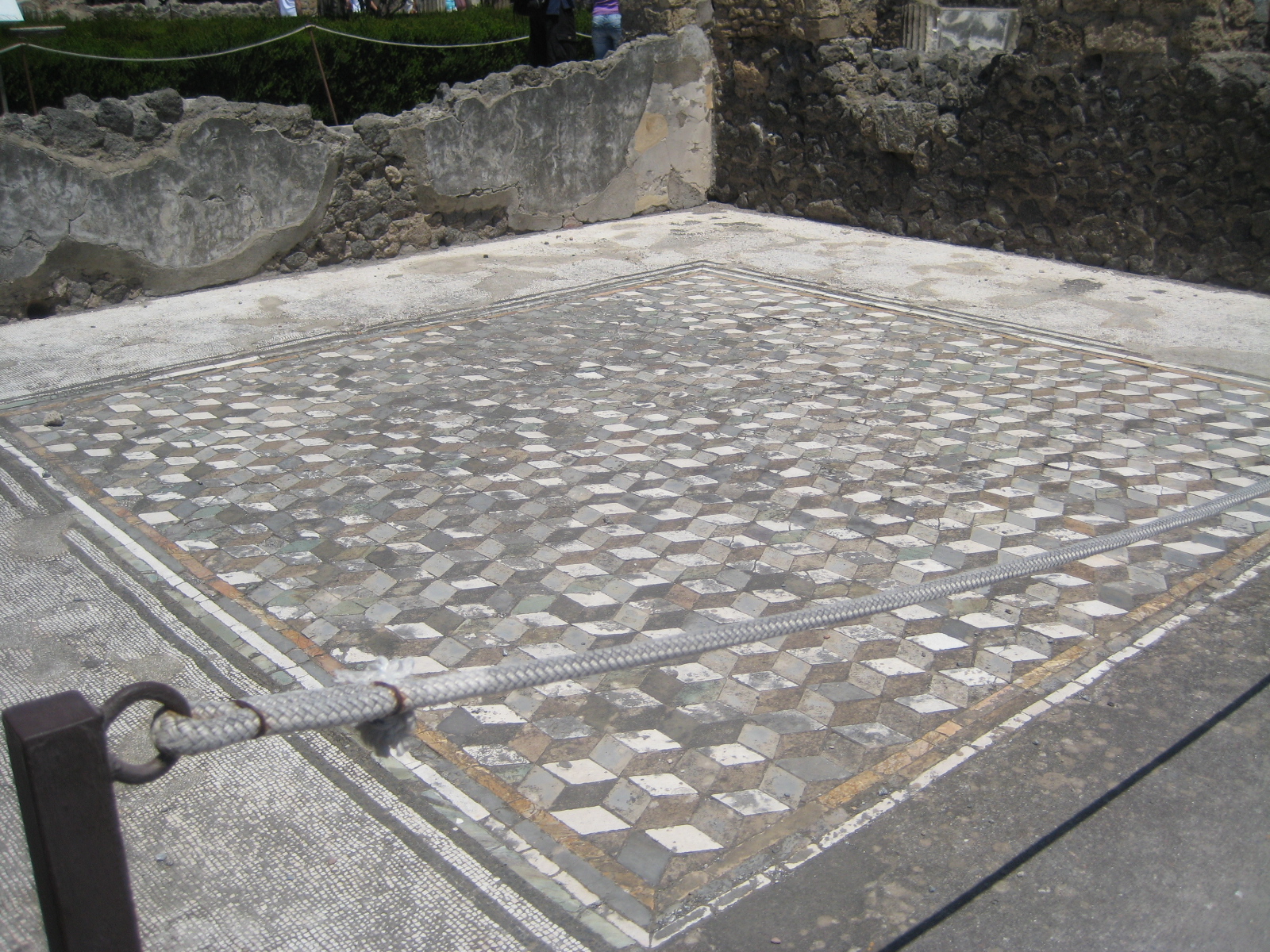
Floor mosaic with geometric design.
Vesuvius, framed between two pine trees. 

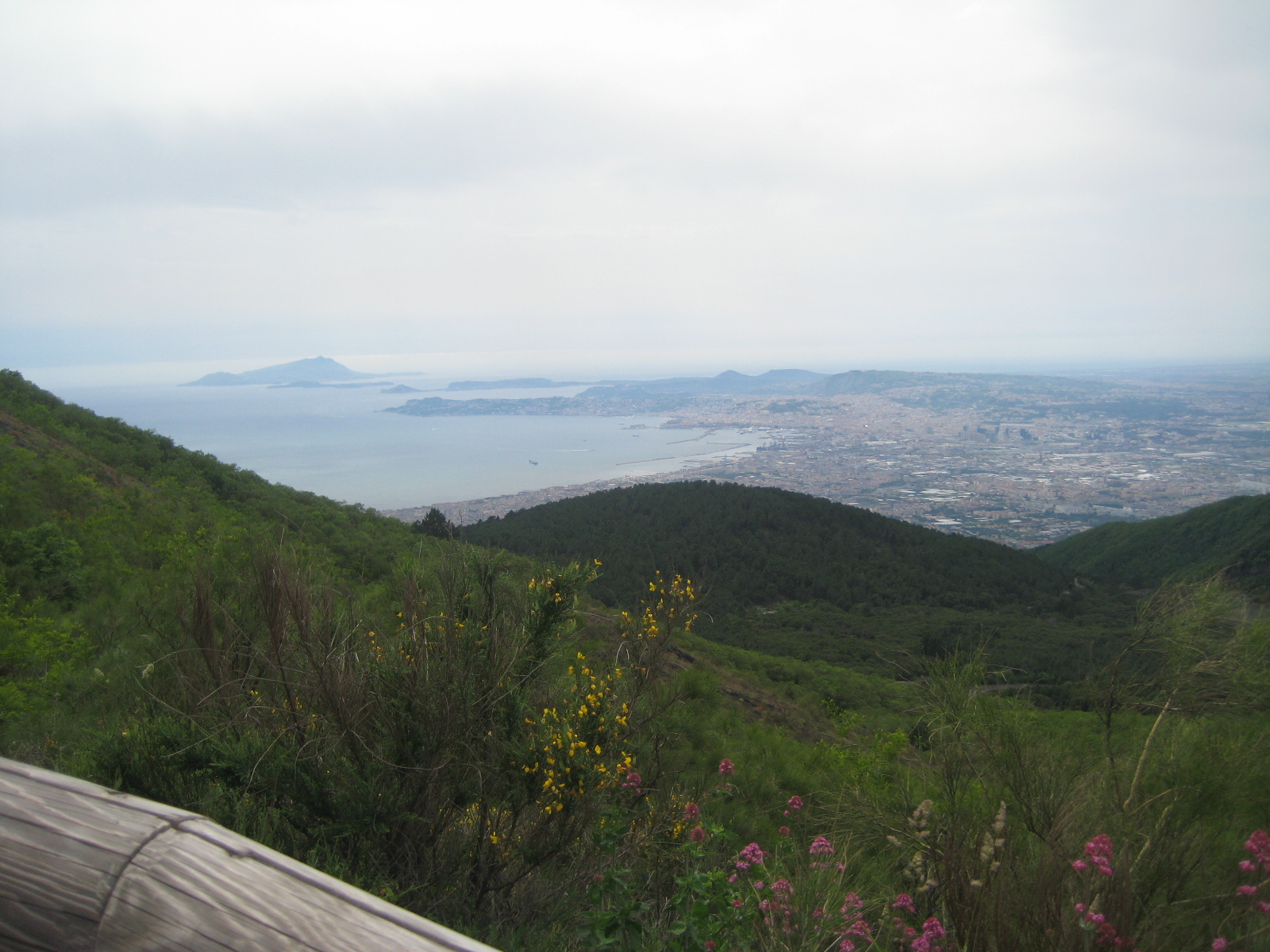
The picture below was taken from Vesuvius looking in the direction of Naples, though it’s hard to get a sense of scale. To get to the summit, you take a local bus for a somewhat hair-raising drive up a narrow two-way road with blind curve upon blind curve, followed by a walk up to the crater on a steep gravelly road. The views are well worth it. We thought we saw a bit of steam drift up from the crater and smelled sulfur at one point, after which we had to rush downhill so as not to miss our bus.

I even took an afternoon off to relax by the hotel pool, with its cliff-top views of the bay and lemon trees for shade, and sat in a lounge chair doing light edits of the manuscript. Writing is hard work.


View from hotel in Vico Equense. That’s Vesuvius across the bay.
Categories
Uncategorized

Where Do You Get Your Ideas?

So I went to my son’s school* last week and talked to the second graders about being a writer. The kids were great, engaged and interested and full of all sorts of practical questions. They squeezed into a classroom, all one hundred of them, and sat on the floor all around me. It didn’t bother them one bit that I wasn’t a writer of children’s books (which I had been somewhat concerned about). I had a book and that was all that mattered. The duck on the cover probably helped, too.

The questions ranged from Are you going to write a sequel? (not in the cards for now) to What are you working on? (a time-travel story) to What are section breaks? (which was actually a bit hard to explain.)
 
There were so many questions that the whole thing was more of a conversation than a talk on my part, which was a good thing.
 
None of the kids asked the classic Where do you get your ideas?, but one of the teachers did. The real answer is that I don’t know — ideas just seem to be there, swirling. The tricky part isn’t getting an idea, but plucking the right one from the vortex and then giving it life and shape and turning it into a story. A book isn’t a single idea, either — it’s a slew of them, small ones, medium ones, big ones, woven together into (one hopes) something new and interesting. The trickiest part for me is figuring out which ideas will work and which ones are duds or unrealistically grand or too small, and on occasion the only way to know is to try to get them onto the page and either fail or not.
 
So we talked about how they probably have lots of ideas when they daydream and such, and also about how long it takes to write a book (a year, I said, and they were duly impressed.)
 

The half an hour went by quickly and it was time to leave. On the way out I asked my son, “How was it?” He said, Fineseeyoulater, just like that, very fast. I think he was worried I’d embarrass him by giving him a hug in front of the other kids or something.


So where do I get my ideas?


I think they find me.


——–

*Name withheld for privacy reasons. Because how embarrassing would it be if one of your parents blogged about you publicly and even mentioned you and your school by NAME.

Categories
Uncategorized

I wait.

I’m not good at waiting. As it happens, a large part of the business side of the writing life seems to involve waiting. This is merely an observation, not a complaint.

At first, depending on your circumstances, you probably have to wait to chisel out the free time to write at all.

Then there’s the writing itself, which takes a while, but that part is fun.

Next you’re querying agents and waiting to hear back. This involves a LOT of waiting. More likely than not, you may not hear back at all (again, merely an observation, not a criticism), and after a month or a few, you cross that agent off your list. (It used to be that this part of the process might stretch out to the point where you simply give up and stash your manuscript in a drawer forever, but these days you can put your book directly on the Kindle, Nook, etc., and bypass the agent-publisher route. Options are a nice thing to have.)

If you find an agent and a publisher, things suddenly enter a strange zone where time moves both slow AND fast. Slow, because the publication date seems so far away, but fast because there is a lot going on—the editorial process to get through, the choosing of the cover, the proof-reading of the Advance Reader copies (these get sent out to old media and new media reviewers), the wait for the reviews themselves, publicity interviews and appearances to be arranged, book giveaways organized, your website updated, bookmarks or postcards to be designed and ordered, and so on.
Still, before you know it, that publication date that seemed so far in the future is here and your book is out—and now you’re waiting for readers to find it, doing your best to help spread the word. Your Facebook page is slowly acquiring followers, your Klout score is rising, reviews are starting to trickle in to your Amazon product page. Life is good.

Then you write the next one—and perhaps, as it happens, it might just have 92,000 words and be called THE FAR-TIME INCIDENT. One day last week, you send it to your editor… and now you wait, biting your nails, to hear back.
Categories
Uncategorized

Don’t Be a Hog and Other Rules for Coffeehouse Writers

True story. The other day I went to my out-of-home “office”, the neighborhood coffeehouse (henceforth known as Coffeehouse). Usually I come mid-morning, when there are plenty of free spots — Coffeehouse serves pastries and sandwiches, so at lunch time it can get pretty crowded. This day I was a bit late, so I was happy to get the last free table next to an electrical outlet, by the Coffeehouse fireplace. I put my stuff down, my jacket, research materials, mango smoothie, bagel, and laptop… and reached to plug in my laptop cord. Only to discover that the person at the neighboring table had taken both sockets, top and bottom.

I live in the Twin Cities, so trust me when I say that people usually go out of their way to be nice and act un-hoglike (when grocery checkers ask, “Morning, how are you?”, they really want to know.)  The socket-taker had a laptop and an e-reader — hence the two cords — and also a long-drained cup of coffee and a thick anatomy textbook. A pre-med student? She must have noticed me arrive, I think, but didn’t look up from the textbook or offer to unplug one of her devices. My battery was low, so what could I do? Uncomfortably (as I kinda try to be, as much as I can, one of those nice and un-hoglike people) I interrupted her studying and mumbled a polite inquiry as to whether she really needed both things plugged in. She proceeded to unplug one of the cables, grudgingly, and I was able to get some work done.

The incident (yes, in Minnesota, this counts as an incident) got me thinking about how there should be a set of guidelines for writers and others using public spaces as offices on a regular basis. So this is what I’ve come up with:

A Coffeehouse Writer’s Guidelines:

1. Don’t take a 4-person table if there are 2-person tables available. Yes, you need room for your laptop, e-reader and/or books, cellphone, coffee mug, etc., but the coffeehouse has to stay in business (see Rule 2). It’s enough that you’re using their physical space, their electricity, and their Wi-Fi.

2. Help keep the coffeehouse in business. Don’t assume the staff is okay with you buying a lone cup of coffee and staying for four hours. Buy a pastry, a fruit salad, lunch. Don’t sneak in your own food. Really.

3. Don’t be a hog. Electrical outlets are there for everyone to share. Don’t take more than one socket. Invest in a dual outlet adapter. Don’t block outlets with your backpack or briefcase or winter coat.

4. Invest in a pair of headphones. It’s a coffeehouse, not an office or a library. Don’t throw mean looks at the loud party chit-chatting about holiday travel plans or the stay-at-home dad who came in with the boisterous toddler just to get out of the house. They have as much right to be there as you do.

5. Be nice. By now the staff probably knows you by sight, so get to know their names. Ami, the manager of Coffeehouse, took the trouble to learn how to pronounce my name, and the rest of the staff, Carol 1, Carol 2, and Tracey always ask me how I’m doing. This is their workplace. You are, after all, a guest.

6. Don’t base characters in your screenplay or novel on the people who work at the coffeehouse. It just seems rude for some reason. Also, if you ever hit it big, they might recognize themselves. Customers, on the other hand, are okay to use for inspiration. Some of them are probably doing it to you in return.

7. Know when to leave. If the coffeehouse gets really busy and your latte or cappuccino is long gone except for a thin, cold puddle on the bottom of the cup, it’s time to pack up your stuff and leave. Again, you’re a guest. Guests should know when to leave.

8. Finally, the miscellaneous stuff: Don’t leave a mess behind, Don’t talk loudly on your cellphone, and No, the coffeehouse might not be the best place to play that violent video game you’re addicted to. These seem like common sense (though you’d be surprised).

One more thing. Though the above guidelines are meant for writers, most apply to other coffeehouse regulars — like students, website designers, etc. As to the premed student so wrapped up in her studying that she was oblivious to the needs of others? Well, who can blame her? I’ll be the first to admit that the rules can be hard to stick to. Lunchtime crowds and empty coffee cups be damned, who wants to pack up and leave if their creative/academic/entrepreneurial juices are flowing? Been there myself. 

Categories
Uncategorized

I’m a Writer, not a Critic

Some people give out book ratings like they’re candy. I’m not one of them. A hundred or so books sit on my virtual shelves on Goodreads. I’ve written a handful of one-sentence reviews, but so far I’ve only given a single rating — for an audio book. Stephen Fry reading the Harry Potter books. Phenomenal. Five stars. Easy-peasy to give it a rating. Same with movies — I’ve rated dozens and dozens of movies on Netflix, four stars, two stars, five stars, not interested, whatever. No problem.

Books not so much. It’s worked for me so far.

But the other morning I awoke to this on my Goodreads author dashboard:

It’s the new recommendations feature. In the large gray square it points out that I’ve rated only one book (the Stephen Fry reading Harry Potter audio set; Goodreads treats books and audio books the same), and to the right it tells me that I need to rate at least 19 more (twenty being apparently the minimum threshold) to get personalized recommendations from the site.

Maybe it would be different if I’d grown up with the everyone’s-opinion-counts-equally-and-should-be-heard system, but I didn’t. The hundred books on my virtual shelf are only a sample, a sliver of my reading life, the books I happened to catch sight of on my (real-life) bookcases in the past few months and thought, that’s a good book, I should it to my Goodreads shelf. If I added all my P.G. Wodehouses, that be, like, another hundred books right there.

Besides, how do you rate a book you read years ago and remember fondly but suspect that rereading it now that you’re an (ahem) older, wiser adult might change your view of it?

How do you rate books by fellow authors?

For that matter, how do you rate a book in the first place? I think I’m too close to them. I rate movies easily because I’m not in the movie industry. Does anyone expect George Lucas to rate films? (Actually, I have no idea. For all I know, he might.)

By the way, I like all the books on my Goodreads shelf. Why go to the effort of adding them otherwise?

Goodreads recommendations are a welcome feature, but I don’t think that in itself will nudge me into assigning ratings. One thing might, however. It’s not that “1” that sits in the large gray square above. It’s the unintended grammar gaffe in it: “You’ve rated 1 books so far.” That will drive me nuts in about a week, and I’ll have to rate at least one book to change the “1” into a “2”. Once I’ve done that, well…