Categories
Uncategorized

Five Writing Truths That Should Be Obvious but Aren’t… And a Happy New Year!

<!– /* Font Definitions */ @font-face {font-family:Cochin; panose-1:2 0 6 3 2 0 0 2 0 3; mso-font-charset:0; mso-generic-font-family:auto; mso-font-pitch:variable; mso-font-signature:3 0 0 0 1 0;} /* Style Definitions */ p.MsoNormal, li.MsoNormal, div.MsoNormal {mso-style-parent:""; margin:0in; margin-bottom:.0001pt; mso-pagination:widow-orphan; mso-layout-grid-align:none; text-autospace:none; font-size:10.0pt; font-family:Cochin; mso-fareast-font-family:Cochin; mso-bidi-font-family:Cochin;} a:visited, span.MsoHyperlinkFollowed {mso-style-noshow:yes; color:purple; text-decoration:underline; text-underline:single;} @page Section1 {size:8.5in 11.0in; margin:1.0in 1.0in 1.0in 1.0in; mso-header-margin:.5in; mso-footer-margin:.5in; mso-page-numbers:1; mso-paper-source:0;} div.Section1 {page:Section1;}

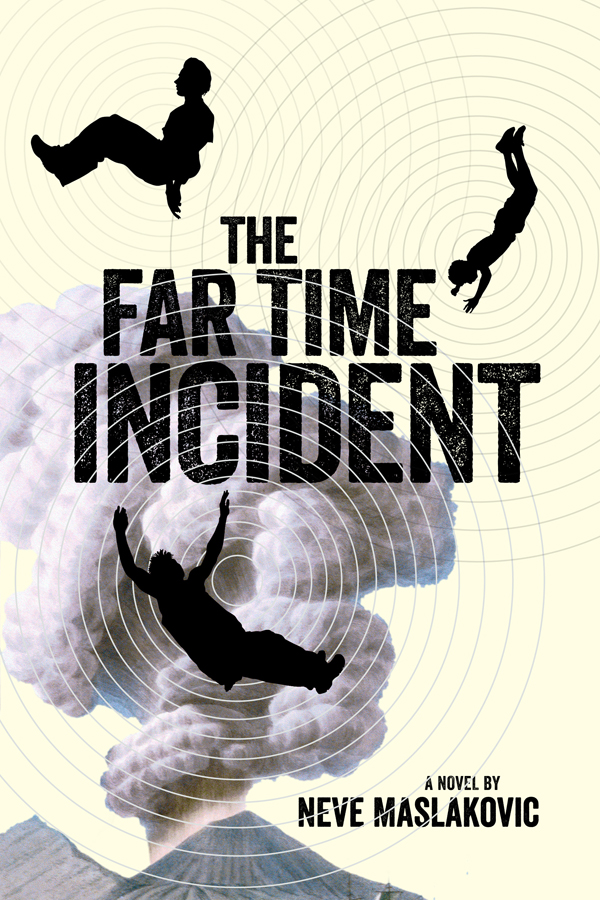
 Hope everyone had (or is having) a good holiday break. The new year is just a few days away and, as I look ahead, I realize I’ll soon cease to be a debut novelist—the publication of The Far Time Incident is just around the corner (early April, more than three months from now, isconsidered just around the corner in the world of publishing.) I’ve learned many practical things since Regarding Ducks and Universes came out, like where to order business cards (I like Moo) and how to make a pic like the one above that says 2013 and incorporate it into a blog post. But I’ve been thinking about the big things, the ones that perhaps should be obvious but aren’t. These five writing truths will probably be of interest mostly to other writers, but here they are anyway:
1. Not everyone will like your book. In fact, someone somewhere will think that it’s the worst book in the world. And say so publicly—on a forum, in a tweet, in an Amazon review, or all three. Don’t worry—yours and my book can’t both be the worst book in the world. Only one is and I’ve yet to come across it.
2. What goes up must come down. For every promotion where you excitedly watch your book climb the Amazon bestseller lists, there is an inevitable reversal that follows (how soon depends on how big your book gets) where you get to watch your pride and joy slowly sink in the ranks. Writing is a business where your sales numbers and royalties (i.e., your paycheck) can vary wildly from month to month and from year to year.
3. Reviews—you don’t have to read them. I’m not talking about reviews from Publisher’s Weekly or Kirkus, but the ones readers leave on sites like Amazon, Goodreads, and LibraryThing. I am very grateful for these and appreciate that people take the time to write them—a good reader review is almost irreplaceable in helping spread the word about a book. But if you drop everything and run off to read every new review that pops up on Amazon, only to emerge elated or crushed, you’re setting yourself up for an emotional roller coaster. I recommend staying away from the one and two stars (see point 1: Not everyone will like your book) unless you have nerves of steel. I don’t. Besides, I figure that book reviews are meant for other readers, not for me as the author.
4. No one can predict how well your book will sell. Regarding Ducks and Universeshas done better (sales-wise and review-wise) in the US than in the UK. Why? I don’t know. Maybe they just like me better over here. The just-released German translation seems to doing nicely so far on Amazon.de (Danke, German readers!), better than the English version in the Canada store. Was there any way to predict that? Not in my, uh, book. The point is that, as with reviews, tying your worth as a writer to your book’s sales numbers at any given moment is a recipe for a lot of emotional ups and downs. So don’t do it. (Easier said then done, I know.)
And, finally:
5. Writing is just like any other job. But only the people you live with know this (and that’s if you’re lucky, and I am). Friends and neighbors will wonder why your house is always messy and why you’re perpetually behind on your errands, when as a writer you are flush with free time. After all, you’re your own boss, aren’t you? Yes, but you’re also the only employee—there’s no one to pass on the job of writing to. If you take a sick day, the manuscript word count doesn’t budge. As a rule, you don’t get up in the morning and wonder when you’ll get around to doing some writing; you get up and you do it. On a side note, yes, you do have to pay taxes, as in any other job.
And that’s it. Just five things. As I write these, I realize that knowing them is not the same as keeping them in mind, which I know I need to work harder at. A New Year’s resolution, then.

May the New Year bring lots of good things to you and yours! 

Journal Avatar to Link Back to Blog Hop
Blog Hop

Categories
Uncategorized

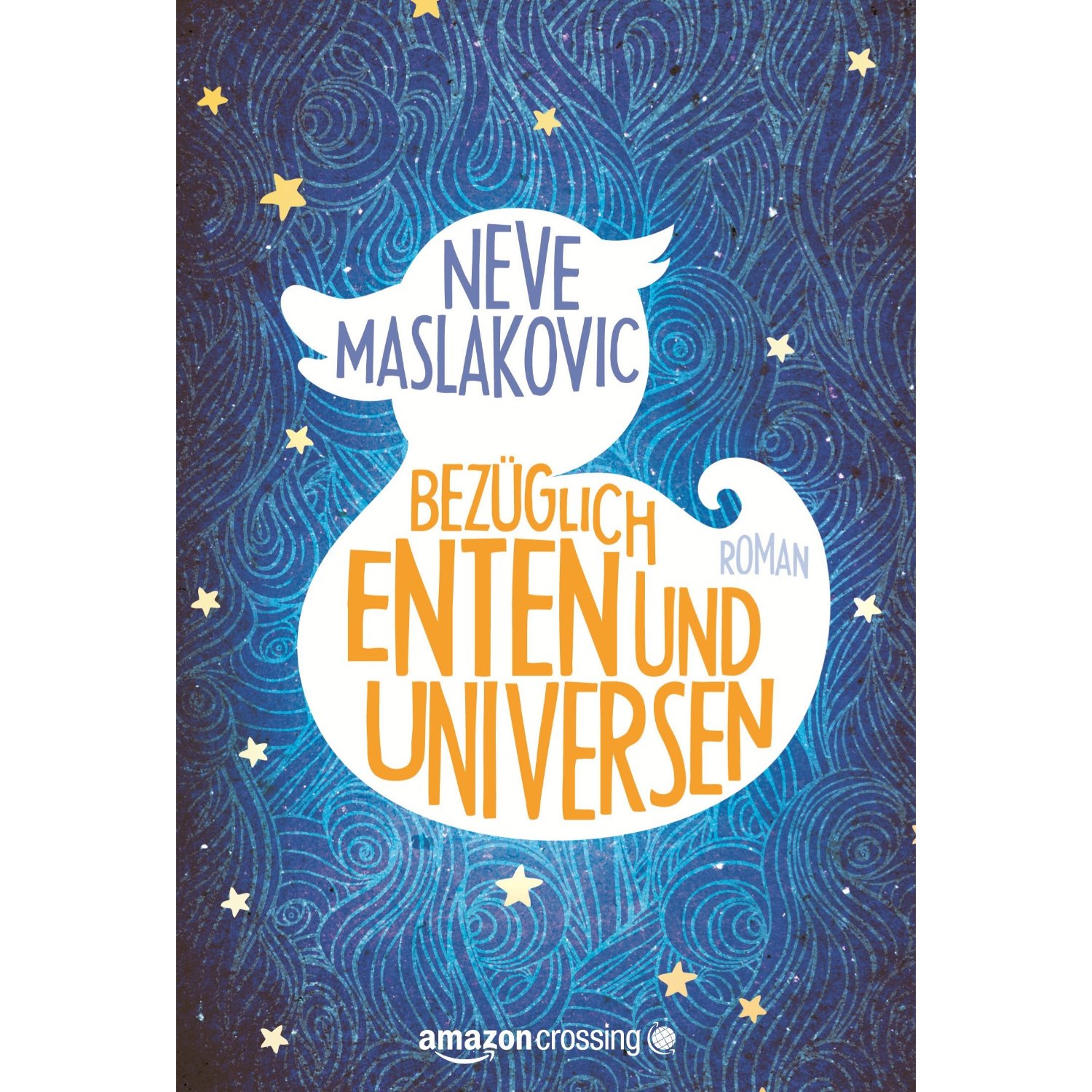
Bezüglich Enten und Universen: Roman

I am pleased to announce that the German edition of “Regarding Ducks and Universes” from Amazon Crossing, as translated by Peter Friedrich, just went up for sale on Amazon, Amazon.de, and the other Amazon stores. The book will be released in trade paperback and Kindle on December 11, 2012. What a fun cover!

Categories
Uncategorized

A Publication Date and New Editions

A couple of weeks ago, I learned a bit about how an audio book gets made—the audio version of Regarding Ducks and Universes is being recorded by the lovely people at BrillianceAudio, with the talented Alexander Cendese narrating. Mainly I learned that there wasn’t much for me as the author to do, as my contribution consisted of supplying preferred pronunciations of names (Mrs. Noor, to rhyme with “sure”) and of words unique to the novel (macar tree, ma-CAR; yabput, YAAB-poot), all of which took about fifteen minutes. I’m very much looking forward to “hearing” the story — the audio book is available for pre-order and will be released on November 6, 2012.

Another bit of exciting news is that a German translation of Regarding Ducks is in the works, through Amazon Crossing (as translated by Peter Friedrich, author and translator). I don’t have many details yet, only the thought that being a translator is probably hard enough without having to deal with finding German language counterparts for made-up terms such as A-dweller, B-dweller, and yabput. (I speak from experience, being bilingual and needing occasionally to translate a phrase in one direction or the other for a family member. There is an art to it. I tend to flounder and say, “uh,” a lot.) But Peter sent me a nice note saying he had fun translating the book, so perhaps it’s all in a day’s work when you do it for a living….

Finally, the publication date for the novel I’ve been working on for the past year, The Far-Time Incident, has been set—March 26, 2013, which would seem like a long time away, except that I know there’s a lot to get done before the big day. This month the final edits are going in with the help of my editor extraordinaire, Angela Polidoro, after which there’ll be cover choices to make, the polishing of the back blurb, the proofreading of the ARC… All great fun.

Categories
Uncategorized

Pics from Pompeii

Just returned from a local-color and fact-gathering weeklong trip to Pompeii for the book I’ve been working on. I’ve been wanting to go for a while now and the stars finally aligned. It was extraordinary to walk on the ancient paving stones and to see the places I’ve spent the past year, on and off, reading and writing about. Travel time from Minneapolis was about 20 hours and the jet lag weighed me down a bit, but I returned having met some great people — Italians and co-travelers from Britain, New Zealand, Spain, and California, not to mention our trusty tour leader Tony O’Connor, who patiently answered all my questions about what life in ancient Pompeii might have been like — and with a camera full of photos and some good notes.

Here is a picture of me in the Forum, with a notepad, camera, hat, backpack, and shades:


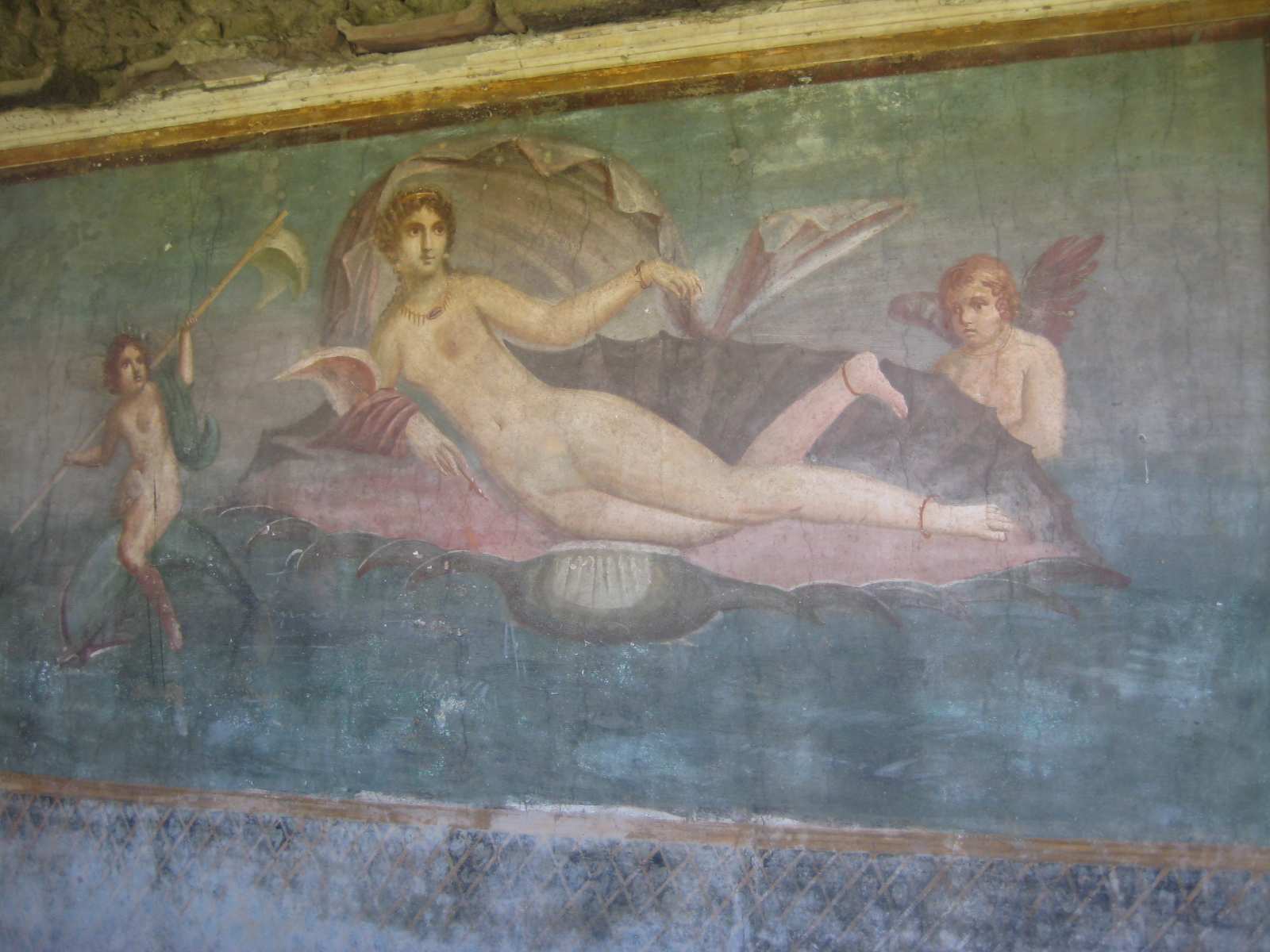
Venus in a shell
HAVE = Welcome
Villa Oplontis

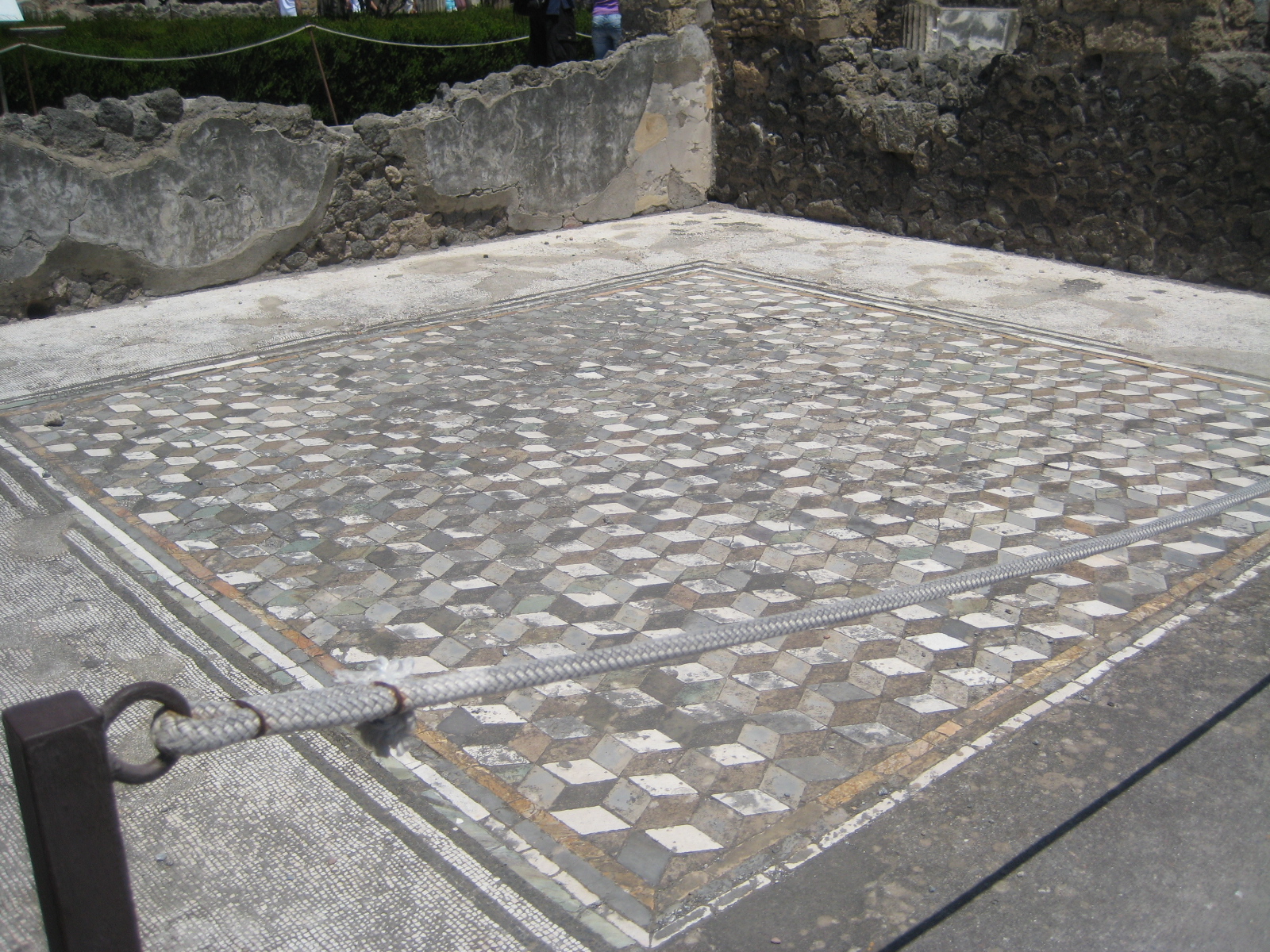
Floor mosaic with geometric design.
Vesuvius, framed between two pine trees. 

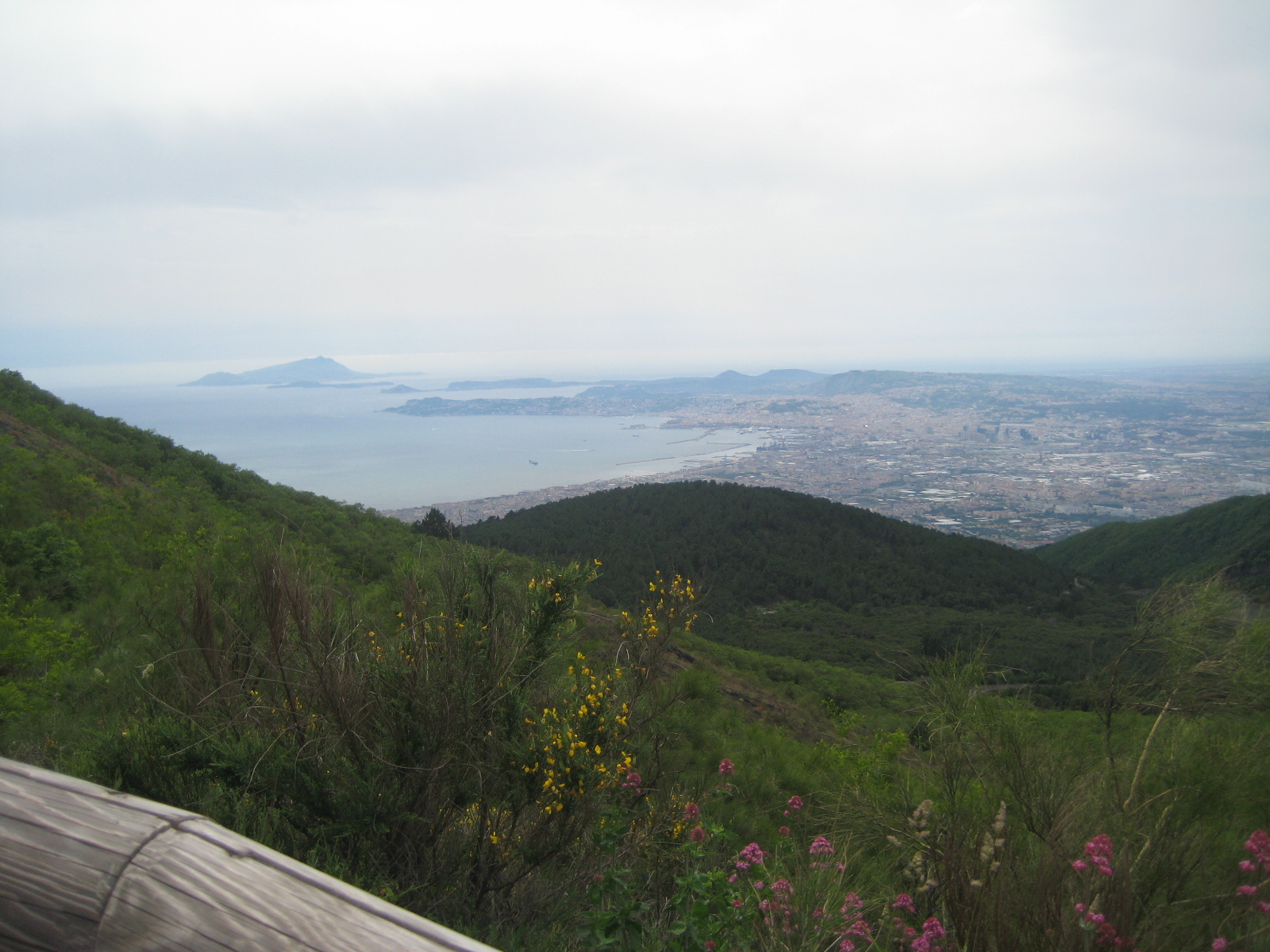
The picture below was taken from Vesuvius looking in the direction of Naples, though it’s hard to get a sense of scale. To get to the summit, you take a local bus for a somewhat hair-raising drive up a narrow two-way road with blind curve upon blind curve, followed by a walk up to the crater on a steep gravelly road. The views are well worth it. We thought we saw a bit of steam drift up from the crater and smelled sulfur at one point, after which we had to rush downhill so as not to miss our bus.

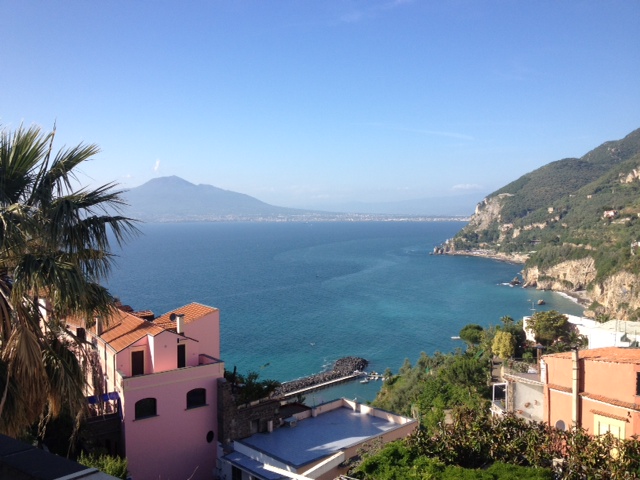
I even took an afternoon off to relax by the hotel pool, with its cliff-top views of the bay and lemon trees for shade, and sat in a lounge chair doing light edits of the manuscript. Writing is hard work.


View from hotel in Vico Equense. That’s Vesuvius across the bay.
Categories
Uncategorized

Where Do You Get Your Ideas?

So I went to my son’s school* last week and talked to the second graders about being a writer. The kids were great, engaged and interested and full of all sorts of practical questions. They squeezed into a classroom, all one hundred of them, and sat on the floor all around me. It didn’t bother them one bit that I wasn’t a writer of children’s books (which I had been somewhat concerned about). I had a book and that was all that mattered. The duck on the cover probably helped, too.

The questions ranged from Are you going to write a sequel? (not in the cards for now) to What are you working on? (a time-travel story) to What are section breaks? (which was actually a bit hard to explain.)
 
There were so many questions that the whole thing was more of a conversation than a talk on my part, which was a good thing.
 
None of the kids asked the classic Where do you get your ideas?, but one of the teachers did. The real answer is that I don’t know — ideas just seem to be there, swirling. The tricky part isn’t getting an idea, but plucking the right one from the vortex and then giving it life and shape and turning it into a story. A book isn’t a single idea, either — it’s a slew of them, small ones, medium ones, big ones, woven together into (one hopes) something new and interesting. The trickiest part for me is figuring out which ideas will work and which ones are duds or unrealistically grand or too small, and on occasion the only way to know is to try to get them onto the page and either fail or not.
 
So we talked about how they probably have lots of ideas when they daydream and such, and also about how long it takes to write a book (a year, I said, and they were duly impressed.)
 

The half an hour went by quickly and it was time to leave. On the way out I asked my son, “How was it?” He said, Fineseeyoulater, just like that, very fast. I think he was worried I’d embarrass him by giving him a hug in front of the other kids or something.


So where do I get my ideas?


I think they find me.


——–

*Name withheld for privacy reasons. Because how embarrassing would it be if one of your parents blogged about you publicly and even mentioned you and your school by NAME.

Categories
Uncategorized

I wait.

I’m not good at waiting. As it happens, a large part of the business side of the writing life seems to involve waiting. This is merely an observation, not a complaint.

At first, depending on your circumstances, you probably have to wait to chisel out the free time to write at all.

Then there’s the writing itself, which takes a while, but that part is fun.

Next you’re querying agents and waiting to hear back. This involves a LOT of waiting. More likely than not, you may not hear back at all (again, merely an observation, not a criticism), and after a month or a few, you cross that agent off your list. (It used to be that this part of the process might stretch out to the point where you simply give up and stash your manuscript in a drawer forever, but these days you can put your book directly on the Kindle, Nook, etc., and bypass the agent-publisher route. Options are a nice thing to have.)

If you find an agent and a publisher, things suddenly enter a strange zone where time moves both slow AND fast. Slow, because the publication date seems so far away, but fast because there is a lot going on—the editorial process to get through, the choosing of the cover, the proof-reading of the Advance Reader copies (these get sent out to old media and new media reviewers), the wait for the reviews themselves, publicity interviews and appearances to be arranged, book giveaways organized, your website updated, bookmarks or postcards to be designed and ordered, and so on.
Still, before you know it, that publication date that seemed so far in the future is here and your book is out—and now you’re waiting for readers to find it, doing your best to help spread the word. Your Facebook page is slowly acquiring followers, your Klout score is rising, reviews are starting to trickle in to your Amazon product page. Life is good.

Then you write the next one—and perhaps, as it happens, it might just have 92,000 words and be called THE FAR-TIME INCIDENT. One day last week, you send it to your editor… and now you wait, biting your nails, to hear back.
Categories
Uncategorized

A duck. And a birthday hat.

Yes, it’s a duck with a birthday hat. (And also definitive proof of why I’d make a really lousy graphic designer. For one, I couldn’t figure out how to get rid of the outer square that delineates photo edge — I thought, being white on white, everything would blend nicely. Second, I cut-and-pasted the duck from my ARC cover. Need I say more?)

Anyway, the duck with the birthday hat is here because it’s been a year since my debut novel came out. Thank you to everyone who bought the print or Kindle version of Regarding Ducks and Universes in the past year, or borrowed it from a library, or left a review, or sent me a kind note, or left a comment saying you enjoyed reading it. You guys are great!

I’ve been getting a lot of questions about the next book — for now all I can say is that there are things in the works. That’s all I can say mostly because that’s all I know for now. Stay tuned. More to come.

Cheers,
Neve

Categories
Uncategorized

Signing a Kindle book – Kindlegraph!

Well, I can now electronically sign copies of Regarding Ducks and Universes and future books on the Kindle, thanks to a new site called Kindlegraph (tagline: Making e-books a little more personal.)

The old way of signing books was pretty simple:

1. Ready acid-free pen and open book.

2. Ask reader for name, then ask again to make sure you have the correct spelling (yes, even if it’s something like Jane or Tom.)

3. Think of something pithy and witty to write (pithier and wittier than Best Regards if possible), then write it on the first page of your book.

4. Sign name with flourish.

5. Close book and thank the reader for buying it, etc.

(While we’re on paper books, Uncle Hugo’s is the place online to get a signed copy of Regarding Ducks & Universes.)

The Kindlegraph way of signing books:

1. Set up an author account on Kindlegraph.com. It doesn’t take long, but you do have to have a Twitter account, which I do, having joined the Twitterverse last month (I can be found there as @NeveMaslakovic).

2. Set up your signature. The site is still relatively new, so the only two options available are (a) type signature in a handwriting font, which looked nothing like my actual author signature; or (b) sign using the mouse.

I opted for the second. It’s hard to sign with a mouse. My signature kept coming out wobbly and shaky, like I had a seriously high fever or had downed way too many glasses of wine or was under the age of five. After a few tries, I settled on a signature. It still doesn’t look much like my normal author signature—it’s wobbly and majorly shortens my last name as it tapers upward into a sweeping line—but I reasoned that a shaky one was better than the fake-handwriting one.

3. Wait for a signature request from reader, which arrives in the form of an email via Kindlegraph, type in something personalized and pithy and witty (see above), then click Send Kindlegraph.

4. That’s it.

From the reader point of view, there’s a bit of work involved (though no more than getting yourself to a bookstore, book in hand, I guess). The directions can be found here, but essentially involve joining the site via your Twitter account (it’s free), then entering your Kindle’s email address (yes, you do have one). This is important: you have to add the site’s email address to the list of approved senders on your Amazon’s Manage Your Kindle page. Do this before you request the autograph; it will not be delivered otherwise. 

Also, make sure the wireless on your Kindle is turned on, or you might get charged a fee by Amazon for receiving the signature document.

Here is my author page on Kindlegraph. Click on Request Kindlegraph — what arrives will be a page with the book’s cover, the personalized message I write, and my electronic signature.

Hopefully the signing process will improve down the line, but for now, it will do. Below is a screenshot of the test Kindlegraph I signed for the site’s creator, Evan Jacobs:

See what I mean about the signature being wobbly and childlike??? I need more practice.

Categories
Uncategorized

Dakota County Author Fair, first ever!

On Saturday, January 21, I’ll be at Dakota County’s first-ever Local Author Fair from 1-4 p.m. with copies of Regarding Ducks and Universes. Come to meet local authors, listen to David Housewright give the keynote address, experience a writing workshop offered by The Loft, enjoy light refreshments, and enter your name in a drawing for free books!

The Galaxie Library is at 14955 Galaxie Avenue in Apple Valley. You can find out more about the fair here.

Categories
Uncategorized

It’s That Time of the Year Again – ABNA 2012

The call went out today for manuscripts for the 2012 ABNA contest:

The Amazon Breakthrough Novel Award brings together talented writers, reviewers, and publishing experts to find and develop new voices in fiction. The 2012 international contest will award two grand prizes: one for General Fiction and one for Young Adult Fiction. Each winner will receive a publishing contract with Penguin, which includes a $15,000 advance.

Open submissions for manuscripts will begin on January 23, 2012 and run through February 5, 2012.

If you’re unpublished (like I was in 2009 when I entered) or self-published, it can be a good way to get your book noticed, even if you don’t win. This year the Top 500 manuscripts get Publisher’s Weekly reviews. Find out more here.