Categories
Uncategorized

Guest Post by Jeff Wheeler: Here There Be Dragons

The great 47North blog swap of 2013 continues! I’m on Jeff Wheeler’s blog today (talking about History’s Mysteries, or where to look for the story) and he is here to tell us how maps help shape his books. Read on:

There is something essential about having a map in a fantasy world. Back during medieval times, a cartographer would reach the edge of their known world and often draw a picture of a dragon or a sea serpent with the label, “Here There Be Dragons”—meaning, in short, “I have no idea what’s over here.”

I write fantasy fiction and maps have always intrigued me and are a key part of my writing process. Just as the story evolves, so do the maps as I continue to build the world and explore new areas. Let me illustrate how this works using the world of Landmoor as an example.


First off, I am not an artist. Sometimes I sketch my maps on my computer and sometimes I sketch it by hand. There needs to be a mix of mountains, forests, valleys, and rivers. There are little stories behind each of the countries and places and how their history fits into the general plot. I like to keep the borders of my worlds rather vague, suggesting that there are places that have not been discovered yet; where the dragons live, so to speak. It gives me flexibility as an author to continue building the world.

When I was writing my novels Landmoor and Silverkin, I was lucky to have a digital artist friend, Reuben Fox, who took my pathetic rendering and transformed it into the lush map you see above. But the maps always start out as black and white in my head or on the page.

Another question I get asked is how I choose all the place names. This is part of the creative process that I really enjoy and I rarely have trouble coming up with new names. I have a notebook where I write down different character and place names when the flashes of inspiration strike and I often consult that list to pick and choose. I also study maps of this world to be inspired by countries, cities, rivers, and mountains that exist today. But in each of my worlds, there are usually a few key locations which are part of the storyline, the pivot around which the plot rotates.

Take Landmoor—for example. When I was first creating that world, the plot centered around a small fortified town near the edge of a swamp and close to the sea—kind of like a medieval New Orleans. That was the first location I crafted in the world. A moor is a swamp. I stuck the name “land” to it and liked how it looked on paper (I was fourteen when I first imagined that story). I’m always combining words and testing out how they fit together. As the plot of the world began to develop, I realized that there were three different political powers struggling for control over the valley between the two mountain ranges. Because the valley has limited ground, it caused military and political tensions between them. Landmoor became a crossroads for this conflict and provided a place where the tensions intersected and flared up. Add a secret magic hidden in the swamps, some powerful sorcerers manipulating the kingdoms, and soon you have a situation ripe with tension and conflict in which to plop the main character, the son of an eminent trading family who longs to escape his social class and explore the kingdoms outside his stifling cultural expectations.

Now, even though maps are so important to me, I’ve often been asked why I didn’t include one in the world of the Muirwood Trilogy. I do have maps of this world and use them for reference, but I did not include any with the novels deliberately. You see, in Landmoor the main character, Thealos, comes from a trading family and he knows the world he grew up in. He’s familiar with the borders and the politics. In Muirwood, the main character is a kitchen servant who only knows the grounds of Muirwood Abbey where she was abandoned as a baby. As she leaves that world, she is completely lost in a vast world full of locations and politics she knows nothing about. Readers explore the world through Lia’s eyes and there is no looking ahead, trying to use the map to predict the plot or where she may end up. In the first book, she explores the land around her beloved Abbey. In the second book, she gets to see more the kingdom she lives in. In the third book, she leaves her kingdom and travels to another. I left the reader blind on purpose.

One of the neatest things about creating a new fantasy world is that I don’t determine everything in advance. I use a general map as a framework for where the action will happen. But often as the characters wander around a bit, I weave in elements from my own personal travels or places I wish to travel someday.

Let me go back to Muirwood for a moment. I knew the main character, Lia, was a scullion abandoned at an Abbey kitchen. I began searching Google for medieval kitchens to help inspire me. I found a striking image of the Abbot’s kitchen at Glastonbury Abbey in England. I even went so far as to e-mail the groundskeeper and ask for pictures from the inside, which he generously e-mailed to me. On the Abbey’s website, I found an image of the grounds:

On that map, I discovered delightful details, like the Cider Orchard which played a prominent role in the story. This was the beginning of the world. Then I hunted down an ancient map of Glastonbury and the environment around and that research led to other opportunities for topography, climate, and story ideas. Before I had crafted the first chapters, exploring this map inspired many of the scenes that would later happen.

World-building doesn’t happen all at once. While mine begins with a map and a general understanding of the plot and characters and how they will mesh together, I explore the world with my characters leading the way and invent the things that need to be filled in.

Currently, I’m writing the last book of the Mirrowen Trilogy. Yes, it also started with a hand-sketched map. On the northern edge of the map is a scribbled area known as The Scourgelands. For the first two books of the series, I’ve hinted at how dangerous and perilous it is. Now I’ve dragged my characters into the midst of it and am trying to make the journey fit the hype. It’s a land of nightmares and forgotten magic. I can’t wait to drag my readers there next. Perhaps I should post a sign outside that reads, “Here There Be Dragons.”


****

Jeff Wheeler (@muirwoodwheeler) is a writer from 7-10PM on Wednesday nights. The rest of the time, he works for Intel Corporation, is a husband and the father of five kids, and a leader in his local church. He lives in Rocklin, California. When he isn’t listening to books during his commute, he is dreaming up new stories to write.
More information about how he became a writer is found on his website:
http://www.jeff-wheeler.com/
Facebook page:
http://www.facebook.com/muirwoodwheeler
You can find out more about Jeff’s books on his Amazon page

Categories
Uncategorized

A Conversation with Anne Charnock

Today I chat with Anne Charnock, author of A Calculated Life, a Dystopian vision of corporate life in 21st century, which releases this week. We conversed about her switch from journalism to fiction and the ups and downs of the writing life.
Without further ado:

Neve:  Anne, congrats on your debut novel — I’m looking forward to reading it! What prompted the switch from science journalism to science fiction? Was fiction writing something you had always wanted to try, or did you wake up one morning with the idea for A Calculated Life and it took off from there?
Anne:Thanks! … In my journalism days I didn’t think I could make the leap to fiction. I thought the discipline of writing news and features – to an exact number of column inches – would make my writing too tight for fiction. But I took a break from journalism and studied fine art for several years during which time I was asking the question, What is it to be human? My studio tutor nudged me into writing a short story. I realized – my thunderbolt moment – that I should try to answer my question by writing a novel. That’s when I started writing A Calculated Life.
I studied environmental sciences when I left school – a good generalist starting point for journalism. But you are a proper scientist, Neve. Tell me more about that and how that specialist knowledge fed into your writing.
Neve: I started my career as a research engineer before switching to fiction writing. Both are creative endeavors, but in science fiction you don’t have to stick to the rules of this universe. You can be as inventive as you like! 
I had to learn to ignore that inner voice which I developed in my graduate studies, the one that kept bringing up issues like Shouldn’t Felix (the main character in Regarding Ducks) need to use the bathroom? Isn’t he hungry? How does he know anything for sure? Science is built on a rock-solid foundation, brick by brick, but fiction isn’t like that. You get to do more hand-waving. 
Nowadays, the copyediting stage of things, when you’re proofreading and double-checking what you’ve written, is the part of publishing a book that I probably enjoy the least. I think I revert to my engineer self and worry I’ll discover a big flaw or something.
Anne:I agree with you on the copyediting. It’s the final checks on punctuation that I find frustrating. You know those little issues like: should this question mark be in italics? Punctuation and grammar are pretty standard for business reports, formal letters and so on. It’s not so fixed when you’re writing fiction – interior monologue, for example – but you still have to be consistent.
The part I enjoy the most is when I’m in the midst of writing a story, when I’m not sure where it’s going, when I’m happy to go with the flow. And I particularly like writing dialogue. I think that’s partly because I lived in a noisy household as a child – four brothers, a sister, and five cousins living next door. There were so much bantering going on, lots of interrupted speech!
How about you Neve? With your third novel nearing completion, you must know what kind of writing comes easiest to you.
Neve: It’s dialogue writing for me as well. That’s the part that flows the easiest, where you get to know your characters. In terms of the writing process as a whole, from blank page to publication, the part I enjoy the most is when you have that first draft done and it’s starting to look like a book… and now you get to sit down with a red pen in hand and make it a stronger book. It’s when the story finally comes together. Do you find that as well, Anne, that it’s not until the very end that you figure out what the story has been about? Or are you a more organized writer than I am and work from a detailed outline? It seems like that would be faster.
Anne: Yes, I have to admit that during the first draft there are difficult times when I feel like I’m pulling my own teeth out. I like the process of refinement, which takes place as you know, Neve, on many levels – improving each sentence, adding scenes, scrapping a character. Brutal stuff. Moving a scene is more problematic because it has a ripple effect through the manuscript. I changed my opening scene twice. I didn’t delete those earlier opening scenes – I moved them.
I certainly don’t outline. But once I have the first draft, I try to be strategic in working out how to clarify my themes by the addition of new sections or by modifying passages of dialogue. That’s good fun and, of course, at that stage I’m not thinking about marketing the book.
In the UK, it has been difficult for women science fiction writers to get publishing contracts in recent years. So it was a huge relief when a US publisher, 47North, approached me. What’s the situation in the US? Do women SF writers feel they’re increasingly out of the loop?
Neve: I hadn’t heard that about UK publishers, that’s maddening. Personally, I never got to be rejected by publishers — I couldn’t get past the agent gatekeepers! The feedback I got from agents about Regarding Ducks (when I got feedback) was that they thought it was well-written and interesting… and too experimental to pitch to publishers. So I, too, was glad when Amazon Publishing found me (through the Amazon Breakthrough Novel Award contest). Did you send your manuscript to agents or publishers at all, Anne, or did you go straight to self-publishing? How did you make that decision?
As to whether women SF writers in the US feel left out of the loop, I suppose I’m out of the loop by definition: I spend most of my time at my desk, have been to only two conferences (neither SF), and am not a member of Science Fiction Writers’ Association. You hear and read things, of course. I think it’s great that nowadays we have more paths open to us as writers than we used to.   
Anne: With my novel released this week, I’m planning to stay at my desk, too. I’ll follow your example. It’s time to pick up the pace with my story writing! However, I will go to some conferences next year – I always go to the Hay Literature Festival on the English/Welsh border and I’ll blog about various author events as I did this year. But before Hay, I’ll be going to Norwescon in Seattle, which I’m already excited about.
I did try the traditional publishing route, Neve, without success. I received positive feedback from several agents (and one publisher that I approached direct) but no one signed me up. I knew that publishing houses were starting to pick up self-published titles and that made sense – the market had already tested those titles! So I took the plunge. It involved a humungous amount of work, and as an indie-author I had to find ways to become visible! So I used my journalism experience to start a blog and that’s been a fab spin-off because I love posting. And I also blog for The Huffington Post. From now, I have to get the balance right between blogging and writing fiction.
So, agents found your work too experimental. Would you like to expand on that? And tell me more about the sequel you’re writing.
Neve:  I am glad you found a route that worked for you, Anne! Are you working on a new book these days?
As for my own stuff, I didn’t feel it was too experimental (for all I know, maybe that was just a polite way for agents to turn down representation). In any case, I have to say I’m glad to be past that stage and can now focus just on the writing. Well, other than obsessing about reviews, sales numbers, my Amazon rank, and so on… The sequel to The Far Time Incident has just gone through its copyedit — only 5 months to go before publication!  
Anne: I’m writing short stories at the moment because I want to try out a few ideas without committing to a full novel. But I expect I’ll start the next  novel soon. I can feel the itch to get started on a big project. Any advice for a debut novelist about to start on the second novel?
Neve: I’d say what I’ve found tricky is time management, especially with a series. You’re doing publicity and marketing for the first book while writing the next one and coming up with ideas for the one after that. It’s a lot of balls to have up in the air.
Good luck with the book launch this week, Anne, and good to talk to you!
Anne: Thanks! Let’s hope we can meet up sometime – maybe at Norwescon. We do have to come out our caves occasionally!

Anne’s writing career began in journalism. Her articles appeared in The GuardianNew ScientistInternational Herald Tribune, and Geographical. She travelled widely as a foreign correspondent and spent a year trekking through Egypt, Sudan, and Kenya. Anne is an active blogger and contributes reviews and book recommendations to the Huffington Post. She splits her time between London and Chester and, whenever possible, she and her husband, Garry, take off in their little campervan to southern Europe, and as far as the Anti-Atlas Mountains in southern Morocco. To find out more about Anne and her books, follow these links:


Categories
Uncategorized

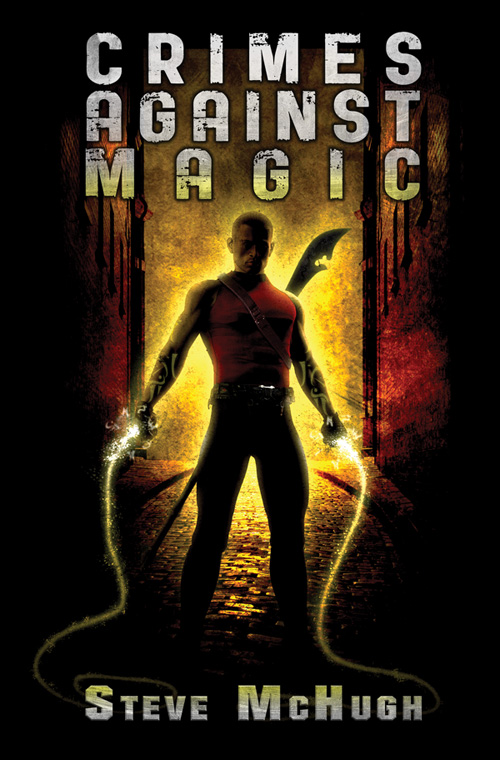
Meet Fellow 47North Author Steve McHugh!

Today I interview fellow 47North author Steve McHugh. Steve writes fantasy, lives in England, and self-published his first two books before they were picked up by 47North. Read on:

Q: Tell me about your books, Steve – what drew you to writing a dark urban fantasy series?


A: My books are Crimes Against Magic and Born of Hatred, the first 2 books in the Hellequin Chronicles. They’re about the life of Nathan (Nate) Garrett, a 1600 year old sorcerer who used to work for Merlin. Each book has flashbacks to a time in his past, which connects with his current story in some way.

I’ve always been drawn to dark fantasy of one kind or another, and when the Hellequin books started to take shape, I knew that was genre they’d be in. I couldn’t have characters from mythology, murder, mayhem and an entire part of the world hidden from human view, without it being on the dark side. 

Q: How did signing with 47North come about?

A: It happened pretty quickly. I had an email from them in Feb asking if they could talk to me about us working together, and then a phone call the next day to discuss everything. A week later they offered me a 3 book deal to republish my first 2 books and then publish my 3rd next year. I’ve been working with them since then.

Q: What will change in the books for the 47North re-release?

A: There are a few changes, things to make the story flow better or make a character a little more interesting. In a way these are my director’s cuts.

Q: Where do you get your best writing done — home, coffeehouse, other?

A: My office is at home, so I get most of my work done there, usually when my 3 daughters are in bed. Otherwise I get harassed constantly or have to settle some dispute or another.

Q: Do you outline your books in advance or are you the fly-by-the-seat-of-your-pants kind of writer?

A: Somewhere in the middle. I know the beginning and end and I’ve got a pretty good idea what happens between the two, but I don’t map out every chapter. I tend to have an idea of where I want the end of the chapter to be and then I see what happens. If I mapped everything out in advance, I’d only change it all anyway.

Q: Favorite quote from one of your own books?

A: I’ve got a few favourites, but they spoil the plot somewhat, so my favourite non-spoiler is in Born of Hatred. It’s between Nate and Olivia, an agent for Avalon.

Olivia forced a smile. “You really are not what I’d expected.”

“I’m an enigma wrapped inside a riddle, all bundled in something quite wonderful.”

“It’s nice to see you have a healthy opinion of yourself.”


“It’s a burden I live with every day.”


Q: Just because I’m curious about how other authors function — do you read your Amazon and Goodreads reviews?

A: I try not to because once in a while you’ll get a bad one that’s either nasty, or you really disagree with and you’ll feel crappy. So, I tend to stay away from reading reviews too often. I pop over every once in a while and see how they’re going, but I try not to make a habit of it.

Q: Best thing about the writing life? Worst thing?

A: The best thing is seeing your idea crafted before you, having it come to life. But also, having people who have enjoyed your work tell you so. That’s an amazing experience.

The worst? Deadlines. Deadlines suck. Especially when you get 3 or 4 in a very short period of time. And when that deadline is editing based, it sucks even more.

Q: E-books or paper ones?

A: E-books. These days I don’t have the room for shelves full of books, mostly because my shelves are already full of books. That’s not to say I don’t read paper books any more, but I’m more likely to pick up an e-book.

Q: Finally, what are you working on now?

A: I’m currently working on book 4 of the Hellequin Chronicles, Prison of Hope, and a novella, Infamous Reign, which takes place in the same world as the Hellequin books.


You can find out more about Steve and his books on FacebookTwitter, and his website, http://stevejmchugh.wordpress.com/.
Categories
Uncategorized

News This Second Week of August

A heads-up about a new feature on my blog – starting September first I’m going to have once-a-month guest posts from fellow 47North authors, which should be fun. They’ll talk about their books and so on, and maybe reveal some things I’m curious about (such as whether they read their Amazon reviews). Since 47North publishes a wide variety of science fiction, fantasy, and horror, expect an equally wide variety of personalities and opinions. (I mean that in a good way.)

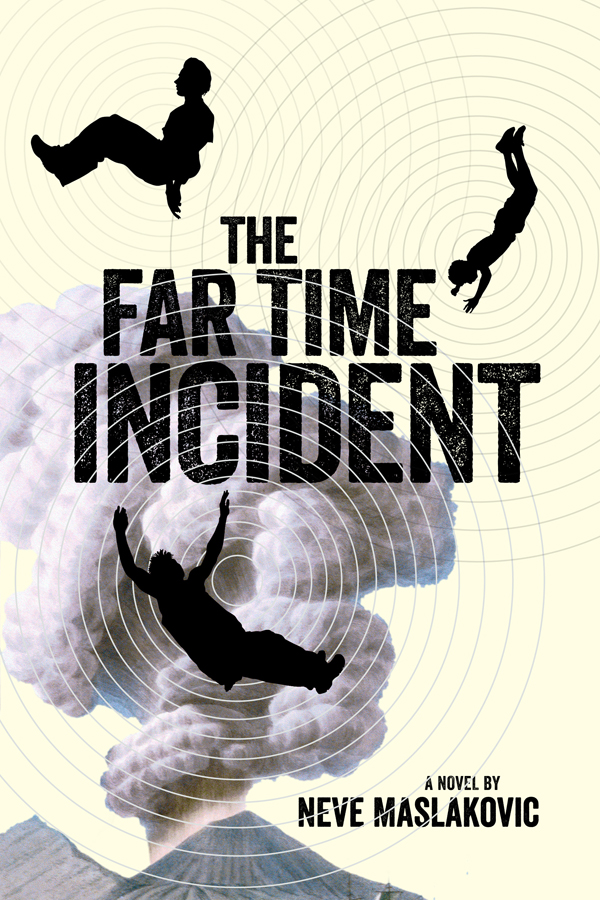
In other news, since it’s gone up on Amazon, I can now reveal the cover of The Runestone Incident, due out in February of next year! I really like the color flip to the cover of Book 1 in the series — for The Far Time Incident we had a near-white background and black lettering and falling figures, while Book 2 has a black background and white text and figures, as you can see below. And then there’s that lovely touch of orange, which just pulls it all together.

This time everyone is falling into the North America part of the globe, which fits the story well. As an aside (I don’t remember if I commented on this with Book 1 or not), it’s really nice that the people on the cover are actually people-shaped, as opposed to being video-game bodied and totally unrealistic. I like to think Julia is the one near the top, but I suppose she could be any of the three.

Hope everyone is having a good August!

Categories
Uncategorized

Title and Pub Date Reveal

For anyone who’s been wondering about what’s happening with the sequel to The Far Time Incident, I have a quick update:

  1. The title of Book 2 in the series (drum roll please!) is The Runestone Incident.
  2. The expected publication date is February 11, 2014


The one-sentence description reads thusly: In the second installment of Neve Maslakovic’s addictive time travel series, St. Sunniva University duo Julia Olsen and Nate Kirkland are in the fourteenth century on the trail of a mysterious runestone and a missing postdoc. No cover yet, but the listing has already gone up on Amazon.


Speaking of Amazon, Regarding Ducks and Universes recently passed a hundred reviews there, which seems like a milestone. It’s been two years and a couple of months since the book came out and reviews are still trickling in as new readers continue to discover it, which is, of course, awesome in itself. So I just wanted to say a big thank you to everyone who read the book — I appreciate if you took the time to leave a review, whether you liked it, or didn’t, or thought it had just the right number of ducks or needed fewer ducks or more ducks or whatever. You guys rock!


Categories
Uncategorized

News This Third Week of June

Hope everyone is enjoying their summer (or winter, depending on which part of the world you’re in). Lots of rain, green, and mosquitoes here.

Over on Chris Henderson’s blog, TheWriteChris, I talk about Writing Sci-Fi and Making it Real. Chris sent me a list of insightful questions, such as What’s the best advice about writing you want to pass along? Spoiler alert — I quote Neil Gaiman in the answer.


The sequel to The Far Time Incident has gone into the developmental edit and I’ve been reworking the draft based on feedback from my editor, Angela Polidoro. Angela is fantastic at her job, somehow managing to zero in on small, sentence-scale issues while simultaneously keeping her finger on the big-picture pulse of the story. This stage of things is both fun and stressful, as I’m making any last major changes to the story and watching it (hopefully!) all come together. 

Book 2 in the Incident series is slated for publication sometime in early 2014, which seems really far away, but there is a lot to be done between now and then for the book via the trusty hands of everyone at 47North. After the developmental edit, there’s the copyedit, the proofread, cover design and promo text, Advance Reader Copies to be printed and sent out, and whatever else I might have forgotten to put on the list! Rolling up sleeves and getting back to work…

Categories
Uncategorized

Book Signing at Uncle Hugo’s

A save-the-date post for Twin Cities friends — I’ll be at Uncle Hugo’s on Saturday, June 29 from 1-2 pm signing books and sharing a table with Kelly McCullough, who’ll be signing his 9th fantasy novel, Blade Reforged. Come hang out with us and enjoy the reader’s nirvana that is Uncle Hugo‘s (and its mystery twin next door, Uncle Edgar’s). Uncle Hugo’s, founded in 1974, is “the oldest independent science-fiction bookstore” in the US — well worth a visit if you’re in town, so stop on by!  

Categories
Uncategorized

News on This First Week of May

Today’s news is that the big May snowstorm veered off at the last minute and just missed us — towns just south of us got 8+ inches, but our lawn stayed green. Also that I was invited to write a guest post for the Kindle Daily Post. The topic suggested was What are your five favorite time travel novels? Had I thought about it really deeply, it would have been hard to choose from all the great time travel novels out there, so instead I went with the more straightforward method of listing the first five books that popped into my head (figuring that was a sure-fire way of guaranteeing they were my favorites). Read my guest post here and let me know what your favorite time travel novels are!

In other news, I’m doing a giveaway on Goodreads for both the new book and my first one. If you’re a Goodreads member, you can enter to win a signed copy of The Far Time Incident or Regarding Ducks and Universes (or both!). The giveaway runs until May 13.

Finally, The Far Time Incident has been picked by the Science Fiction and Fantasy Kindle editors for their list of books “no self-respecting geek should go without,” which is, of course, unbelievably cool. I don’t know how often they change or update these lists, but for now you can spot the book there, nestled between Flatland and Philip K. Dick’s The Man in the High Castle. Like I said, very cool stuff.

Categories
Uncategorized

Launch Day – The Far Time Incident

It’s here! The Far Time Incident releases today in trade paperback, Kindle, and audiobook formats. Am I excited? Yes. Am I nervous? Yes. I feel I should say something deep and profound to mark the occasion, like that writing a book is like building a boat and that I’ve done the best job I could with hammer and nail, hoisted the mast and sail, carefully painted the name on the prow, and all I can hope for at this point are a calm sea and a good tailwind. 

Not for nothing is it called a book launch

The point, I think, is this — that publishing means letting the book sail where it will, releasing it into the sometimes murky, sometimes stagnant, and sometimes wonderfully blue publishing waters. Yes, the publisher and you do what you can to help it along by sending out copies to reviewers and spreading the word via social media and other means, and hope that book finds a home in readers’ hearts. But ultimately it means that the time has come to focus your efforts on building that next boat, and I have — the sequel to the Far Time Incident is well in the works, with a nice solid draft sitting in my computer.


But today I’m here to watch a boat sail away. Here’s to a great launch!

Categories
Uncategorized

Audio Book News – Mary Robinette Kowal

The Far Time Incident has found an awesome narrator in Mary Robinette Kowal. I cannot wait to hear the audio book — it comes out the same day as the print and Kindle editions, April 9. Here is Mary’s bio from her website:  

Mary Robinette Kowal is the author of Shades of Milk and Honey (Tor, 2010) and Glamour in Glass (Tor, 2012). In 2008 she received the Campbell Award for Best New Writer, and in 2011, her short story “For Want of a Nail” won the Hugo Award for Short Story. Her work has been nominated for the Hugo, Nebula and Locus awards. Her stories appear in Asimov’sClarkesworld, and several Year’s Best anthologies. Mary, a professional puppeteer, also performs as a voice actor, recording fiction for authors such as Elizabeth Bear, Cory Doctorow and John Scalzi. She lives in Chicago with her husband Rob and over a dozen manual typewriters. Visit www.maryrobinettekowal.com

I am so glad that the book is in such experienced hands (note that Mary is not only a Hugo Award winner but also a puppeteer — how cool is that?). Early last week we fine-tuned the pronunciation of the Latin names and words in the Pompeii section of the book, something I didn’t pay a lot of attention to in the writing stage. Mary needed to know whether to use Classical Latin or the more modern (Ecclesiastical) Latin. (As an example, Veni, vidi, vici would have been way-nee, wee-dee, wee-kee originally.) We settled on having her use Classical in the short bits of dialogue with Pompeian locals Sabina, Secundus, and others, and the more familiar modern Latin for place names and such. And yes, I’m going to be more aware of this side of things from now on, and maybe think twice before incorporating tongue-twisters like Gnaeus Alleius Nigidius Maius (who was a real person, by the way) into the manuscript. Mary seemed to take it all in stride, though.

As an added bonus, Mary’s own books sound right up my alley and will make for great reading on our upcoming winter break. Other things to look forward to are seeing family and feeling that warm Florida sunshine… Bone-chilling subzero temperatures here this week.